
Editing
Your manuscript will go through five editing stages:
-
-
-
-
- Evaluation (Reviews your title for acceptance of the content and genre we seek. We also build a manuscript profile (we call it a “biometric”) that counts the words, pictures, artwork, layout style, pull quotes, references, endnotes or footnotes, chapter starts, and other technical needs.)
- Oversight (Creates a plan for your manuscript, preps and formats the original manuscript for editing, documents and relays author's format requests, and selects the team that will specialize in your particular content.)
- Copy Editing (Corrects sentence-level errors such as grammar, spelling, and punctuation, along with style and consistency issues. This includes subject-verb agreement, confusing or wordy phrasing, redundancies, missing words, missing or inaccurate citations, and more.)
- Developmental Editing (Includes a review of the entire manuscript to eliminate inconsistencies, redundancies, missing information, or anything that might confuse a reader. It corrects problems with sequence or organization, ensuring a logical flow of concepts at all levels. When necessary, it removes irrelevant portions and/or adds new material to create smooth transitions or better connections between ideas. Family & Friends stops after Copy Editing; Professional, Advanced, and Premium receive increasing levels of developmental editing. (See samples below this list)
- Final Proofread (The “last pass” before submission or publication, ensuring everything is correct and no lingering errors remain (e.g., focus, typos, missing words or punctuation, or other errors).
-
-
-


Why Authors Need Focused Editors:
Avoiding the Rabbit Trail
Authors are creative beings, often brimming with ideas that span far beyond the scope of their current project. While this creativity is the lifeblood of great writing, it can also lead to a common pitfall: veering off-topic and down “rabbit trails” that distract from the main narrative. This is where the role of a skilled editor becomes crucial.
The Author’s Dilemma
-
-
-
-
-
- Passion for the subject: Authors are typically passionate about their topics, which can lead to the temptation to explore every fascinating tangent.
- Wealth of knowledge: Many authors have extensive knowledge in their field, making it tempting to include every interesting fact or anecdote.
- Creative flow: When in the zone, authors may follow their train of thought wherever it leads, sometimes straying from the core message.
-
-
-
-
The Editor’s Role
-
-
-
-
-
- Maintaining focus: Editors help keep the manuscript aligned with its primary purpose and target audience.
- Structural integrity: They ensure that each chapter, paragraph, and sentence contributes to the overall narrative or argument.
- Clarity and coherence: Editors help streamline ideas, removing unnecessary detours that might confuse or lose the reader.
- Objectivity: With a degree of emotional distance from the work, editors can more easily identify when the content strays off-course.
-
-
-
-
Benefits of Focused Editing
-
-
-
-
-
- Enhanced readability: A focused manuscript is easier for readers to follow and understand.
- Stronger impact: When extraneous content is trimmed, the core message becomes more powerful and memorable.
- Improved pacing: Removing tangents helps maintain a steady narrative flow, keeping readers engaged.
- Market appeal: A focused book is easier to recommend and review, which helps it sell.
-
-
-
-
Striking the Balance
The best editor-author relationships balance preserving the author’s unique voice and vision while ensuring the work remains focused and purposeful. Here at TEACH Services, we will insist that your title’s focus be kept on track. This collaboration results in a stronger, more impactful final product that resonates with its intended audience.
In conclusion, while authors bring creativity and expertise to their work, editors play a vital role in channeling that energy into a cohesive, focused manuscript. This partnership helps create books that not only capture the author’s passion but also effectively communicate their ideas to readers.

Design
What is the first thing that catches your eye at a bookstore filled with thousands of books? Of course, the cover! People are attracted to well-designed, clean, sleek covers that visually present the book’s central idea. Our publishing levels benefit from the front cover design service built by our graphics department.
And once they open the cover, you will continue to hold their interest if the interior text is organized and professional with consistent headings, chapter titles, easy-to-read typefaces, appropriate spacing, and other design features. (Cover layout and design are included with every publishing level; see Publishing Options for what each level includes.)
The role of the designer is to make the interior of your book look its best. Our designer will do the following:
-
-
-
- Update any web links to forwarded web links,
- Select fonts and font sizes,
- Place pictures, graphics, and tables,
- Create the table of contents and cross-link the pages,
- Insert footnotes and cross-link them,
- Create pull quotes,
- Build chapter layout,
- Select proper margins and trim sizes
-
-
All common trim sizes are available, and custom trim sizes can be arranged. Remember that smaller trim sizes mean more pages, and larger trim sizes fewer pages (the number of pages will not change the author’s cost to publish, but will increase or decrease the Suggested Retail Price).
At TEACH Services, our designers work closely together to create a beautiful, professionally designed interior that will grab people's attention.


Chapter title page with image. Page with pull quote & footnote. Page with sidebar
Cover Design
Standard cover design work includes the front and back cover. Our designers will supply up to four customized 4-color cover designs for you to review and choose from. Included will be a description of your book, the ISBN barcode, and a short biography and photograph if you desire and if there is enough space. If artwork is desired or required, we have many artists we work with who specialize in various styles. See additional Illustrative Artwork information HERE.
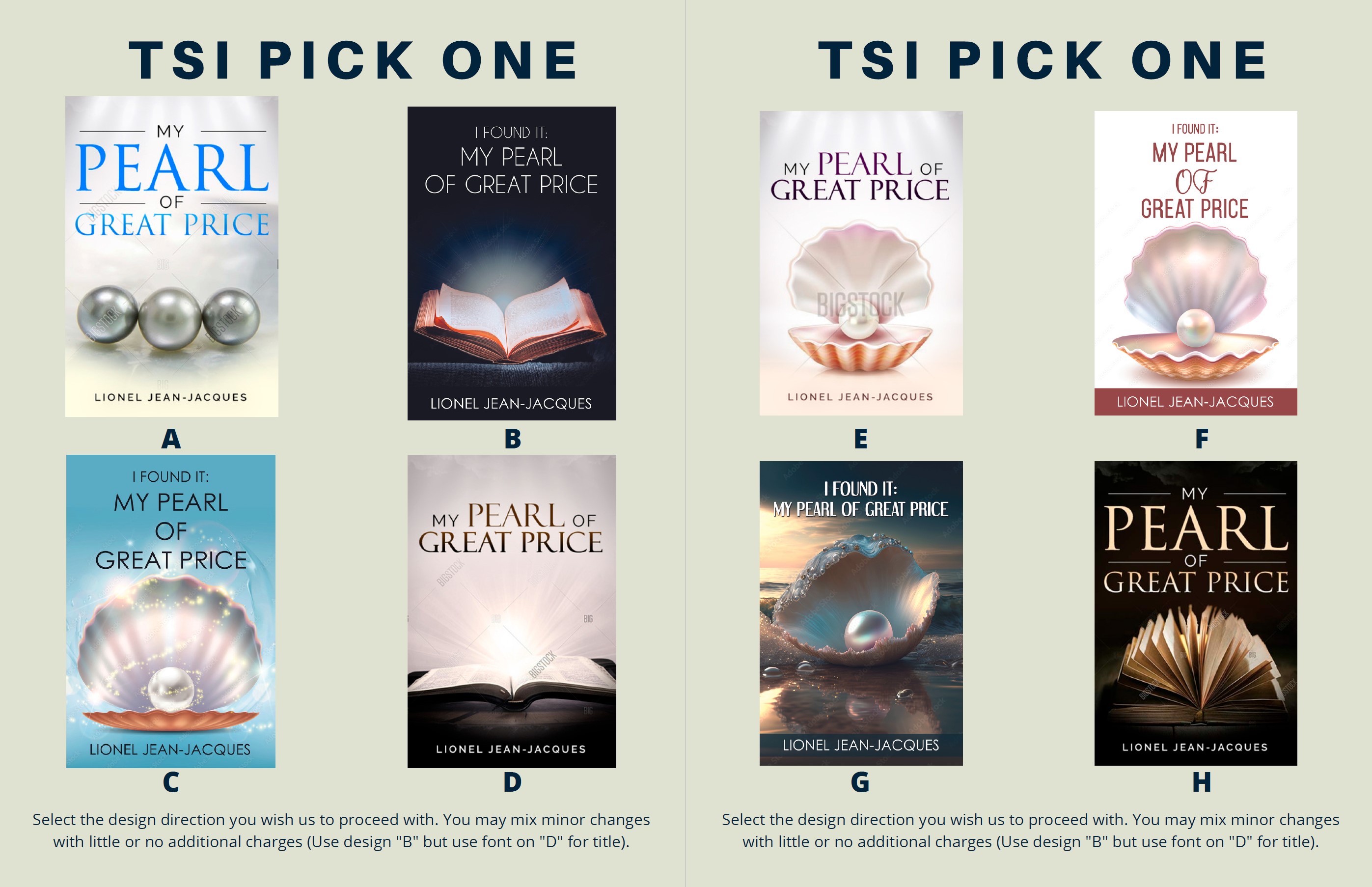
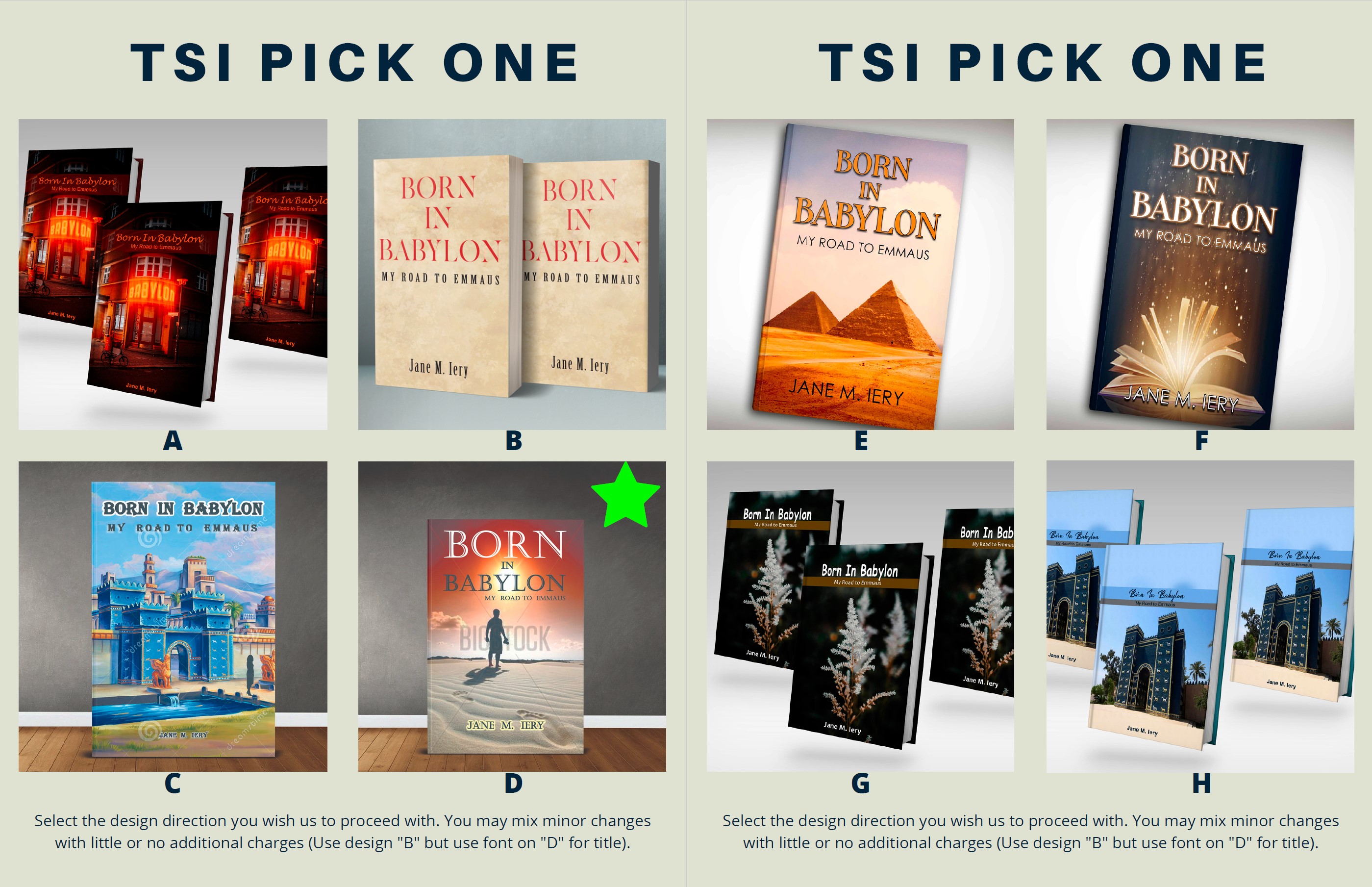
Cover and interior design are included in every level. Supplying your own cover art reduces the package price by $150.00.
Back Cover Bio
Writing an effective author bio serves a few important purposes, including increasing sales through association. Here are some tips on how to approach it:
Why write an author bio:
-
-
-
-
-
- It builds your credibility as an author by highlighting relevant backgrounds, qualifications, and writing experience. This establishes trust with readers.
- It connects your personal story to the book, allowing readers to understand what motivates your writing. Making this emotional connection helps drive engagement.
- It markets both you and your work, sharing key details readers can latch onto. A strong bio entices interest in your current and future books.
-
-
-
-
How to write one:
-
-
-
-
-
- Lead with the most relevant information first - prominent publications, prestigious experience related to the book's subject matter, key personal details. Hook them in.
- Be concise yet reveal enough character to form an impression of your voice and persona. Share interesting snippets that capture attention.
- Align your bio with your book’s theme and tone. Reinforce key messages or emotions that compelled you to write this story and that readers can relate to.
- Include fun, unusual facts about yourself that humanize you and satisfy curiosity. But focus primarily on credibility and relevance to your book’s content.
- Close by promoting published works, social media handles, and websites to drive traffic and enable readers to engage further with you. Point them to where to learn more.
-
-
-
-
With an engaging, strategic author bio that connects who you are with what you write about, you can maximize interest in your work and credentials.
Here is a sample bio for a book:
Dr. John Smith has been teaching Bible studies for over 30 years, focusing extensively on apocalyptic texts and Biblical prophecy. As Pastor of Oakwood Church, his weekly sermons unpack scripture for modern application. He holds advanced theological degrees from Andrews University and has led dozens of seminars on the book of Revelation across the country. His passion is making complex symbolic writings accessible to everyday readers hungry for truth. This study guide marks his first print publication, capturing a lifetime of examining Revelation's meaning for faith today. When he’s not preaching or writing, John enjoys flying with his son.
E-Book Conversion
E-books are now a standard companion to print books. More and more individuals and publishers are supplementing their print books with e-books. TEACH Services has invested time and money into learning the ins and outs of the eBook market and the different formats and requirements of the major eBook distributors, including Amazon Kindle, Barnes & Noble Nook, Google Play, Kobo, Apple iBooks, and eBooks.com.
When we convert a print book to an eBook, the finished product will have the following components:
-
-
-
- Front book cover design
- Table of contents
- Copyright and front matter
- Body text
-
-
Subject to an additional fee are the following components:
-
-
-
- Tables, photographs, or graphics
- Footnote and endnote hyperlinks
- Index hyperlinks
- External hyperlinks
-
-
If you are a publisher interested in outsourcing your eBook production or an author who has already published your book but would like to convert it to an eBook, don’t hesitate to contact us at 706-504-9192.
Children’s or Graphic Books
If you have or are writing a children’s book, we follow a slightly different procedure to build and create your book. Click HERE to view our process. Please note: Children’s e-books are usually produced in color using a tablet in a “fixed format.” Illustrations can be a high cost in producing any illustration-heavy book. A standard 24-page children’s book should have a minimum additional budget of two to three thousand dollars over the base publishing cost to build, artwork needs are determined case by case according to your needs.
Audiobook Conversion
Audiobook sales have grown by double digits for more than a decade, according to the Audio Publishers Association’s annual sales surveys. TEACH Services offers Audiobook conversion to help you keep your book relevant in today’s market. TEACH will help you procure the right reader--ensuring that you are happy with the sound, feeling, and emotion the reader gives. For more information about audiobook conversion, please contact our publishing department with questions or to schedule an appointment for an Author Advisor to call you at your convenience: Schedule a call with an Author Advisor
Indexing (Optional)
The process of creating an index for a book is simple and yet complex. After the layout of your text proof (the typeset pages you review before printing) is approved, we will create a unique word index. Using the unique word index, the author can tweak the list to include only the words (or terms) desired for the final index. The last step is sending the author a finished index list with the correct page numbers for review. After approval, we will add your index to the book. The index creation cost depends on the number of index words and terms selected. Cookbooks are sometimes different. HERE is a link to a sample way to do cookbook indexes.
ISBN, Library of Congress number, and BISAC code are handled for you at every level; see Publishing Options.
Following are samples of some of our book covers:


